The Design That Says "Don't Talk to Me Before My Coffee" and Means It
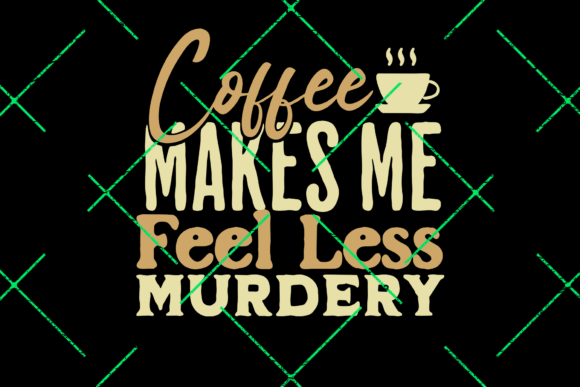
There's a particular kind of magic that happens somewhere between the first sip and the third. The world shifts from a hostile, chaotic place into something almost... manageable. That feeling—that sacred, caffeine-fueled transformation from "might bite someone" to "okay, I can handle this"—is exactly what the Coffee Makes Me Feel Less Murdery design captures. It's not just a funny phrase slapped on a shirt. It's a wearable confession, a badge of honor for anyone who's ever needed liquid patience to start their day. And for designers, creators, and small business owners, it's a surprisingly versatile design asset with real commercial potential.
Why This Design Actually Works (Beyond the Joke)
Let's be honest: the internet is drowning in "funny coffee" designs. Most are forgettable. What sets this particular concept apart is its brutal, relatable honesty wrapped in clean visual execution. The phrase itself operates on multiple levels—it's self-deprecating, universally understood by the sleep-deprived, and just edgy enough to be memorable without crossing into genuinely offensive territory. That balance is harder to hit than most people realize.
The included files—a high-resolution PNG with a transparent background and a matching JPG at 300 PPI—give you genuine flexibility. You're not getting a low-quality graphic that falls apart when you scale it up for a poster or down for a business card. The transparent background means you can drop it onto any surface, any color, any material without awkward white boxes or clashing edges. For anyone who's ever tried to remove a background from a poorly prepared file at 2 AM, you know this matters.
From Screen to Shelf: Real-World Applications
The beauty of a design like this is its adaptability across mediums. Think beyond the obvious t-shirt application (though it makes an excellent one). This is a design that translates naturally onto:
- Coffee mugs and tumblers – The most intuitive pairing. A sarcastic mug on a coworker's desk says more about workplace culture than any mission statement.
- Tote bags – Perfect for farmers' markets, bookstores, or anyone who wants to announce their caffeine dependency while carrying groceries.
- Wall art and prints – Framed in a kitchen or home coffee bar, it becomes a conversation piece that doubles as honest decor.
- Greeting cards – Birthday cards, holiday cards, "just because you survived Monday" cards. The sentiment fits almost any occasion involving someone who drinks coffee.
- Aprons and kitchen accessories – For the home barista or anyone who takes their morning ritual seriously.
- Stickers and decals – Laptop stickers, car decals, planner accessories. The design scales well for smaller formats.
- Social media content – Quote graphics, story backgrounds, or product mockups for coffee-related brands.
For small business owners running print-on-demand shops, this kind of evergreen design is gold. It doesn't rely on a trend that'll expire in six weeks. People have been grumpy in the morning since the dawn of time, and they'll still be grumpy in the morning five years from now. The design has longevity.
Building a Brand Around Honest Humor
There's a reason brands like Cards Against Humanity and The Oatmeal built empires on irreverence. Consumers—particularly millennials and Gen X—are drawn to brands that feel authentic, that don't take themselves too seriously, and that acknowledge the messiness of real life. If you're building a product line around coffee culture, gift items, or lifestyle merchandise, incorporating designs like Coffee Makes Me Feel Less Murdery signals to your audience that you get it. You understand their mornings. You've been there.
This kind of brand alignment creates emotional connection faster than any carefully curated Instagram aesthetic. When someone sees a design that makes them laugh because it's painfully true, they don't just buy it for themselves—they tag a friend, share a photo, or grab a second one as a gift. Word-of-mouth marketing doesn't get more organic than that.
Consider the gift-giving angle, too. The description mentions sisters, brothers, aunts, uncles, grandparents—and that's not random. Funny, relatable coffee designs are practically universal gift territory. Hard-to-shop-for dad? Coffee shirt. Coworker's birthday? Mug with this design. White elephant exchange at the office? You've already won. As a seller, understanding that your customer is often not the end user reshapes how you market and present products.
Pairing This Design with Complementary Assets
No design exists in isolation, especially if you're building a product collection or a cohesive brand identity. The real power comes from creating an ecosystem. Imagine a coffee lover's gift set that includes a t-shirt featuring the Coffee Makes Me Feel Less Murdery design, paired with a matching mug, a keychain, and maybe a set of coasters. Suddenly, you're not selling individual items—you're selling an experience, a complete gift solution.
From a design perspective, this particular aesthetic pairs well with:
- Handwritten or script fonts for secondary text elements (like "But First, Coffee" or personalized names)
- Bold sans-serif typefaces for contrast in packaging or promotional materials
- Warm, earthy color palettes—think cream, espresso brown, burnt orange, and forest green—to reinforce the coffee theme without being cliché
- Minimalist layouts that let the humor speak for itself rather than burying it under visual noise
If you're a designer creating mockups for clients or your own shop, test the design across multiple product types before committing. What looks sharp on a white mug might need contrast adjustments on a navy tote bag. The transparent background file makes this experimentation straightforward—you can preview placements quickly without wrestling with masking tools.
Practical Considerations for Sellers and Creators
A few things worth thinking about if you're planning to use this design commercially:
- Check your licensing. Always verify whether the included files come with commercial use rights, especially if you're selling finished products. The distinction between personal use and commercial licensing matters more than most hobbyists realize—until they get a cease-and-desist letter.
- Understand your printing requirements. At 300 PPI, the files are print-ready, but different printing methods (screen printing, DTG, sublimation, heat transfer) have different requirements. A design that prints beautifully on a DTG printer might need adjustments for sublimation on polyester blends.
- Think about your audience's age and sensibility. The word "murdery" is playful, but context matters. A design that flies off the shelves at a college-town gift shop might not land the same way in a conservative boutique. Know your market.
- Layer your product descriptions. When listing products featuring this design, don't just say "funny coffee shirt." Describe the emotion, the occasion, the recipient. "The perfect birthday gift for your sister who can't form sentences before her second cup" sells better than generic descriptors.
The Broader Takeaway for Design Professionals
Working with pre-made designs like this one isn't about cutting corners—it's about strategic resource allocation. Professional designers juggle client work, personal projects, marketing content, and administrative tasks. Having a library of ready-to-use, high-quality design assets means you can move faster on projects where the concept matters more than building every element from scratch. You're not replacing creativity; you're removing bottlenecks.
The Coffee Makes Me Feel Less Murdery concept works because it taps into a shared human experience with economy and wit. That's the formula worth studying, regardless of whether you use this specific design or create your own variations. Find the universal truth. Say it in fewer words than people expect. Make it visually clean enough to reproduce across mediums. Do those three things, and you've got something people actually want to buy, wear, gift, and share.
Now, if you'll excuse me, my coffee's getting cold—and nobody wants to see what happens next.